
Our model
Combining a social response with an income support system
tailored to the local area
Why do we need a new social model?
Social work often relies on public funding, grants, international aid and donations. These resources are essential, but any reduction in them can undermine the services that have been put in place. Our approach involves using the initial support to simultaneously build up the social response and an income-generating infrastructure tailored to the local area.
THE TRADITIONAL MODEL
- A social need
- Funding or a donation
- A social initiative
- The search for new funding.
LE MODÈLE PROPOSÉ
- A social need
- An initial investment
- Une réponse sociale
- a revenue framework
- Income that gradually helps to meet social needs.
We do not replace the state, partners or donations. Our model complements their work by seeking to ensure the continuity of social services.

STEP 1
Identifying the social need
Identify vulnerable groups and the priority needs within the area. These needs may relate to early childhood, education, health, nutrition, protection, accommodation, training, integration, empowerment or other essential social services.
STEP 2
Shaping the social response
Establish the infrastructure, services, teams and organisational structure required to meet the identified need on a sustainable basis. The response is designed in line with local circumstances, applicable standards and the responsibilities of the relevant stakeholders.
STEP 3
Identifying and building the revenue infrastructure
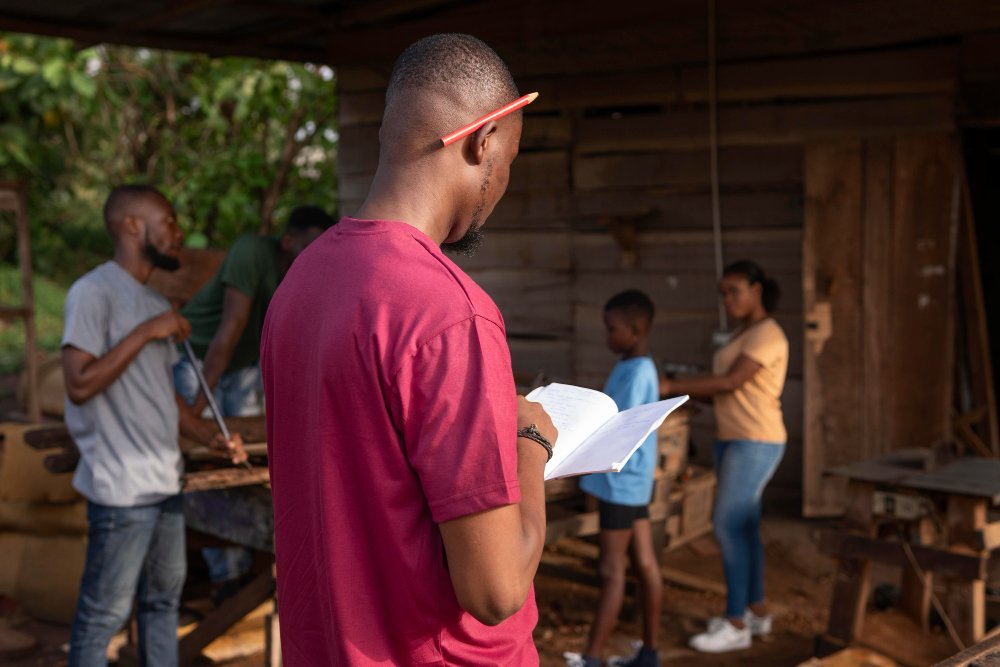
Develop one or more economic activities that are consistent with the area’s resources, skills, constraints and actual market opportunities. These may include agriculture, livestock farming, processing, crafts, storage, trade, logistics, energy, services, digital technology or any other viable activity.

STEP 4
To contribute gradually to the care provided
The revenue generated gradually contributes to the running and development of social services. It can be used to help fund staff salaries, food, healthcare, education, maintenance, equipment and the expansion of services.
A flexible model, not a one-size-fits-all approach
Every system is different. Social needs and the income infrastructure are determined by the specific circumstances of each region.
Autonomy is a gradual goal. It is neither immediate nor 100 per cent guaranteed. Public, private and philanthropic funding remain key drivers of development, expansion and innovation.
Initial funding establishes the system. The revenue generated then gradually contributes to its long-term viability.